Product Screens & Design Rationale
3 polished product screens · 4 strategy artifacts
▶ Launch Prototype
Review the interactive incident response prototype in a new tab
Group 01
Polished Product Interface Screens
These screens show the product experience first: setup, AI-assisted triage, active incident analytics, task burndown, endpoint telemetry, and structured case documentation.
Product Screen 01
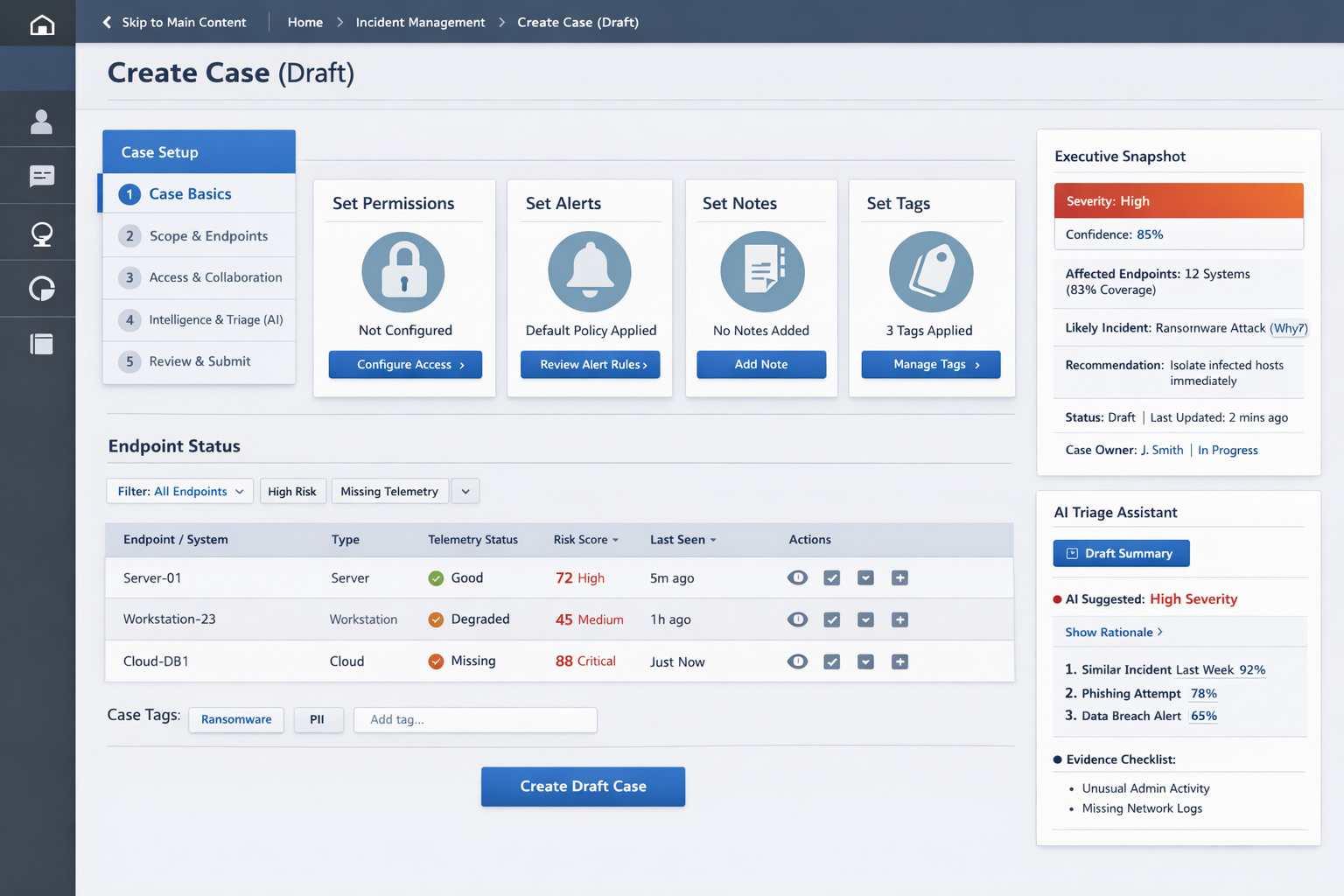
Setup & AI Triage Dashboard
Centralizes setup, permissions, alerts, tags, endpoint risk, and AI-assisted severity scoring so analysts can judge urgency quickly and keep the decision.
View Full Image ↗
Design rationale: AI is decision support, not a black-box authority. The system surfaces risk, context, and priority. The analyst owns the action.
Product Screen 02
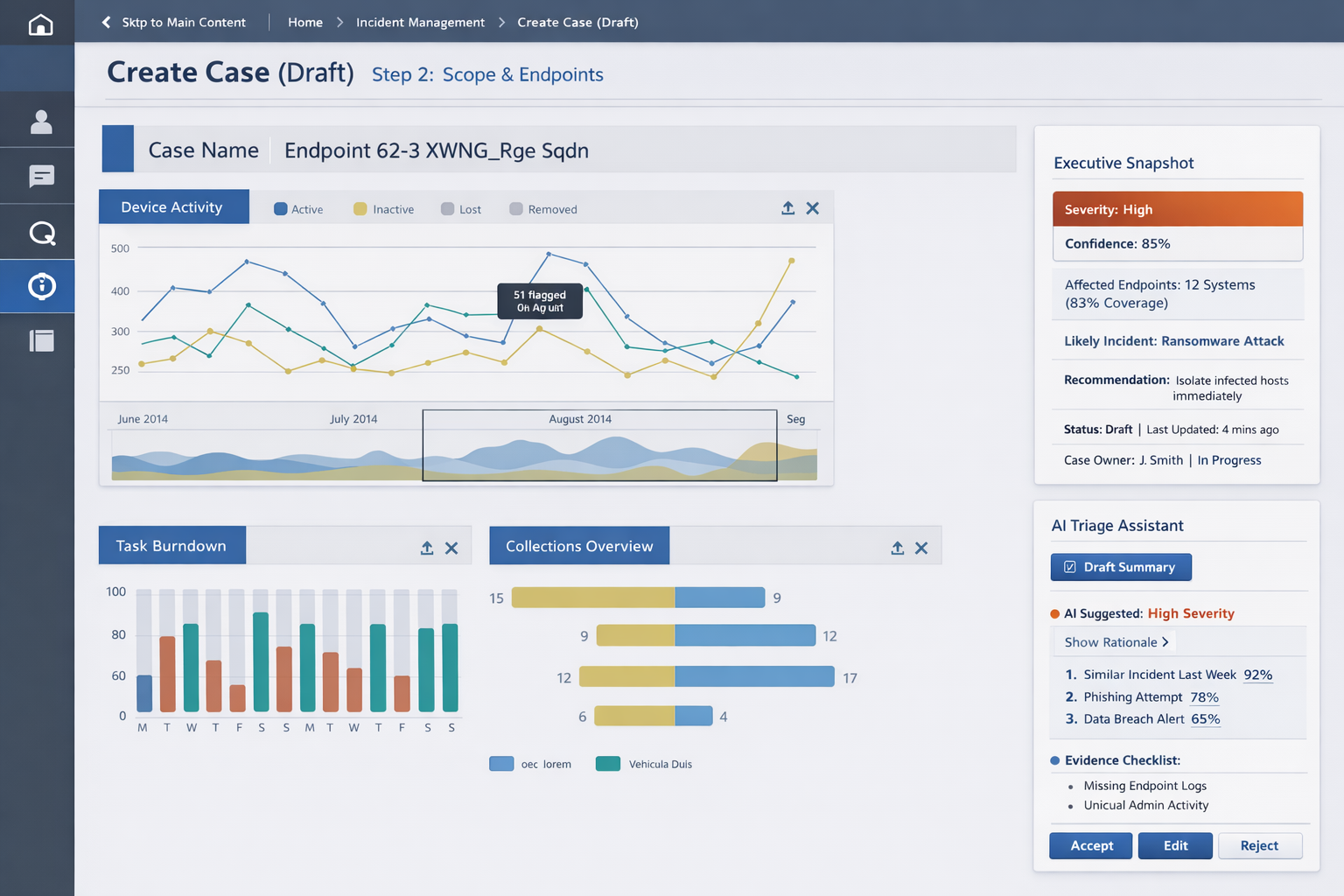
Active Incident Analytics View
Combines device activity trends, task burndown, telemetry, and collections data so analysts can scope an active incident without jumping across disconnected views.
View Full Image ↗
Design rationale: The screen prioritizes scanability under pressure: trend data, task progress, and endpoint activity are grouped around investigation status and next action.
Product Screen 03
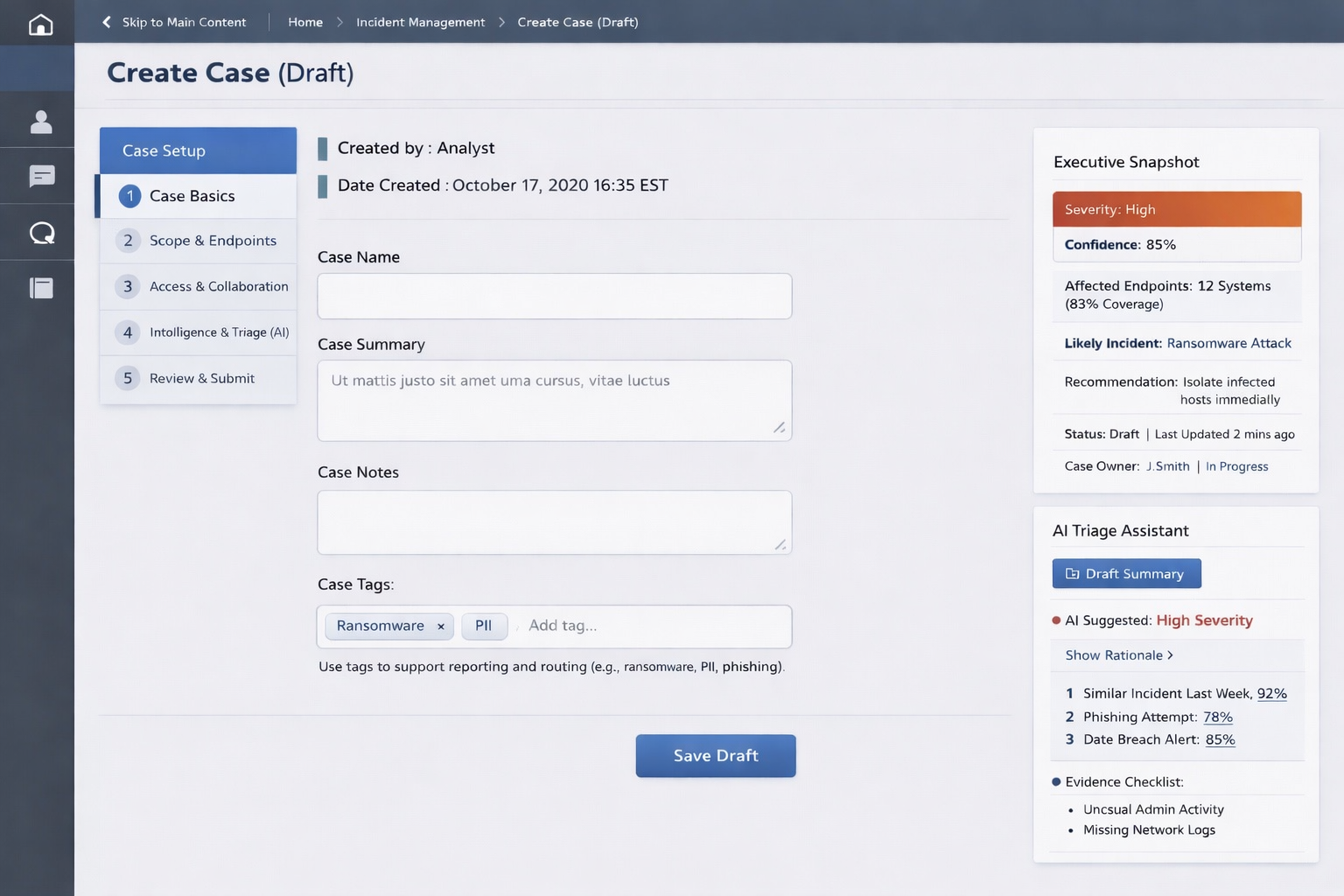
Case Documentation & AI Context Panel
Supports structured case documentation with routing tags, draft states, and an AI context panel that surfaces relevant information during write-up.
View Full Image ↗
Design rationale: Documentation is part of response quality, not paperwork after the fact. Case records stay traceable, and the analyst stays in control.
Group 02
Strategy & Workflow Foundation
These artifacts explain the operating model behind the product: how incidents are created, who uses the platform, how the response flow works, and how role-based design shaped the interface decisions.
Strategy Artifact 01
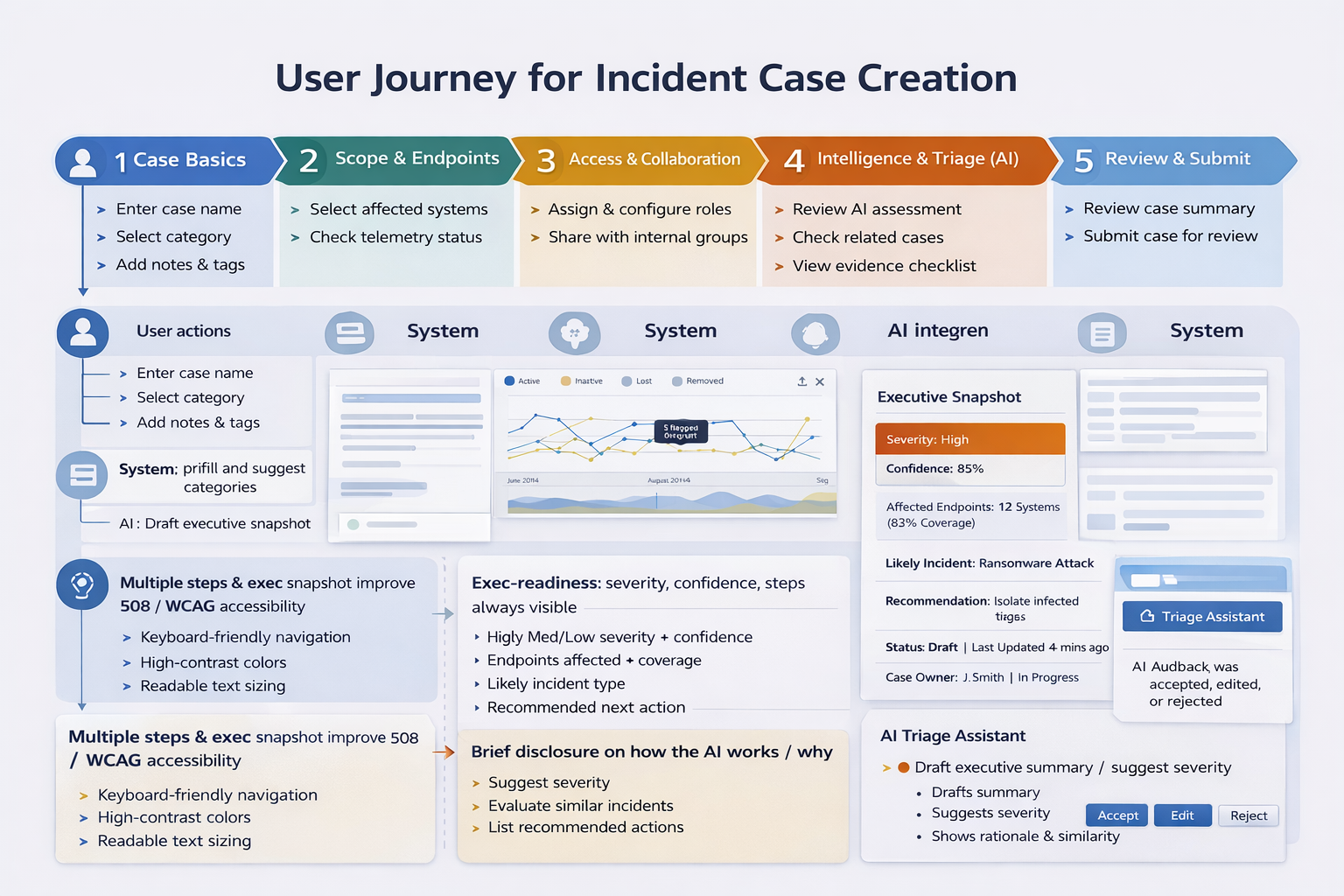
Incident Creation Flow
Guides analysts through structured incident creation, reducing the chance that critical case details are missed before triage, routing, or escalation.
View Full Image ↗
Design rationale: The flow turns case creation into a guided decision path, not a blank form. Each step captures the minimum context needed for downstream response teams.
Strategy Artifact 02
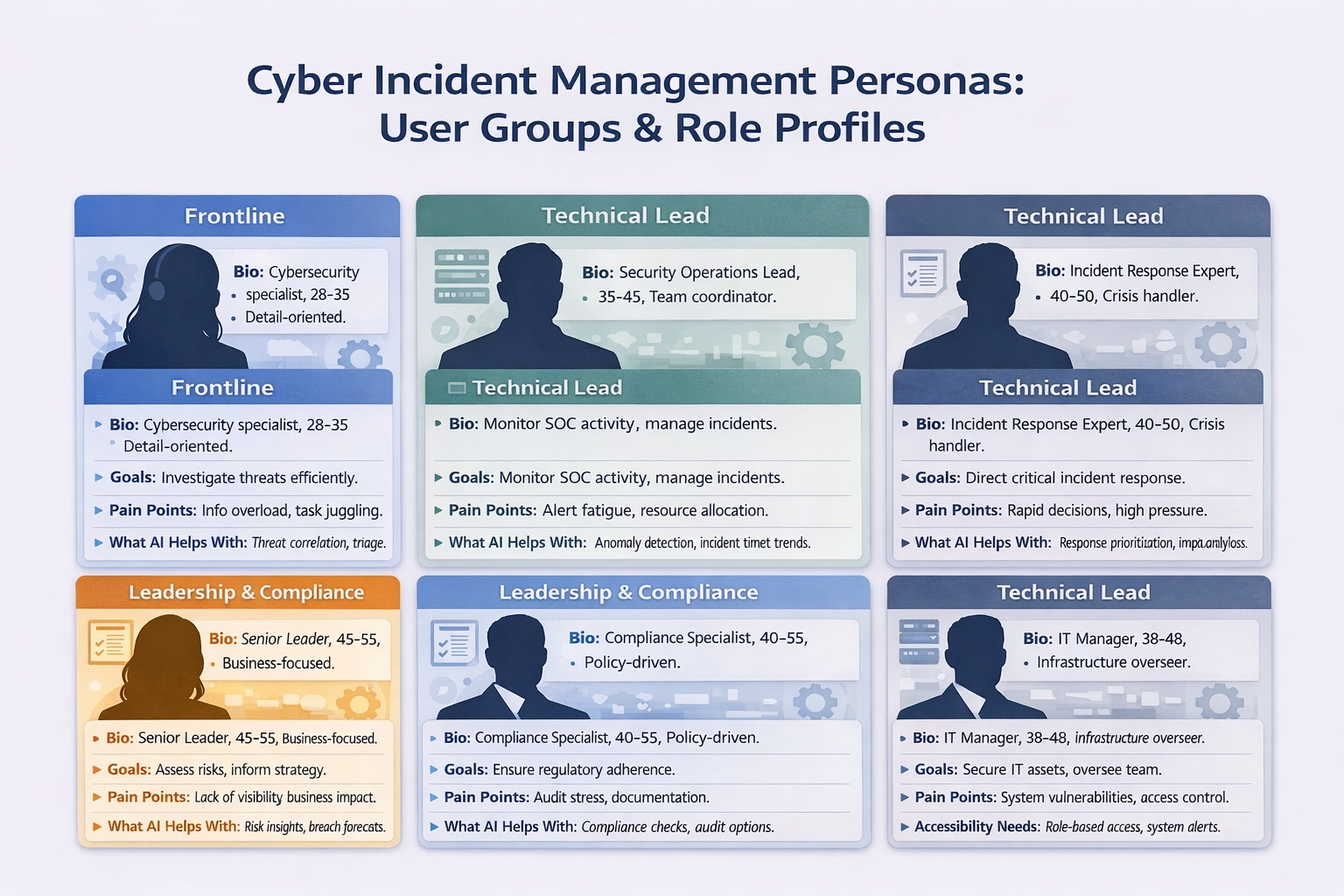
User Roles & Challenges
Defines the six user roles and the different operational pressures each role brings into incident response, from hands-on investigation to compliance review.
View Full Image ↗
Design rationale: Role modeling prevents the platform from becoming analyst-only. It makes handoffs, permissions, and reporting needs visible before interface decisions are made.
Strategy Artifact 03
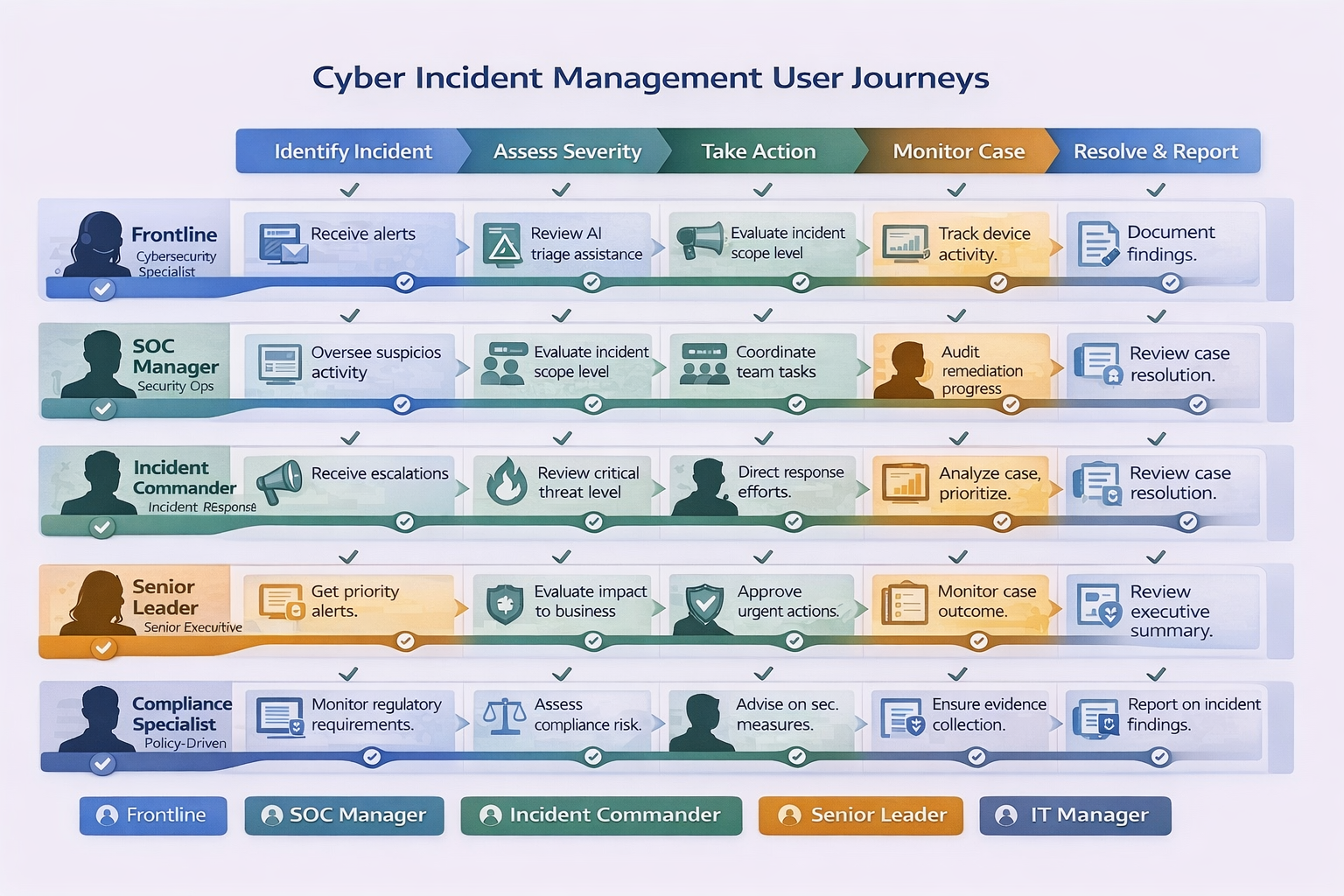
Coordinated Response Map
Maps the coordinated response path from detection through resolution and reporting, giving each role a clear place in the workflow.
View Full Image ↗
Design rationale: Incident response fails when ownership is unclear. This map makes the workflow legible across analysts, managers, technical teams, and leadership.
Strategy Artifact 04
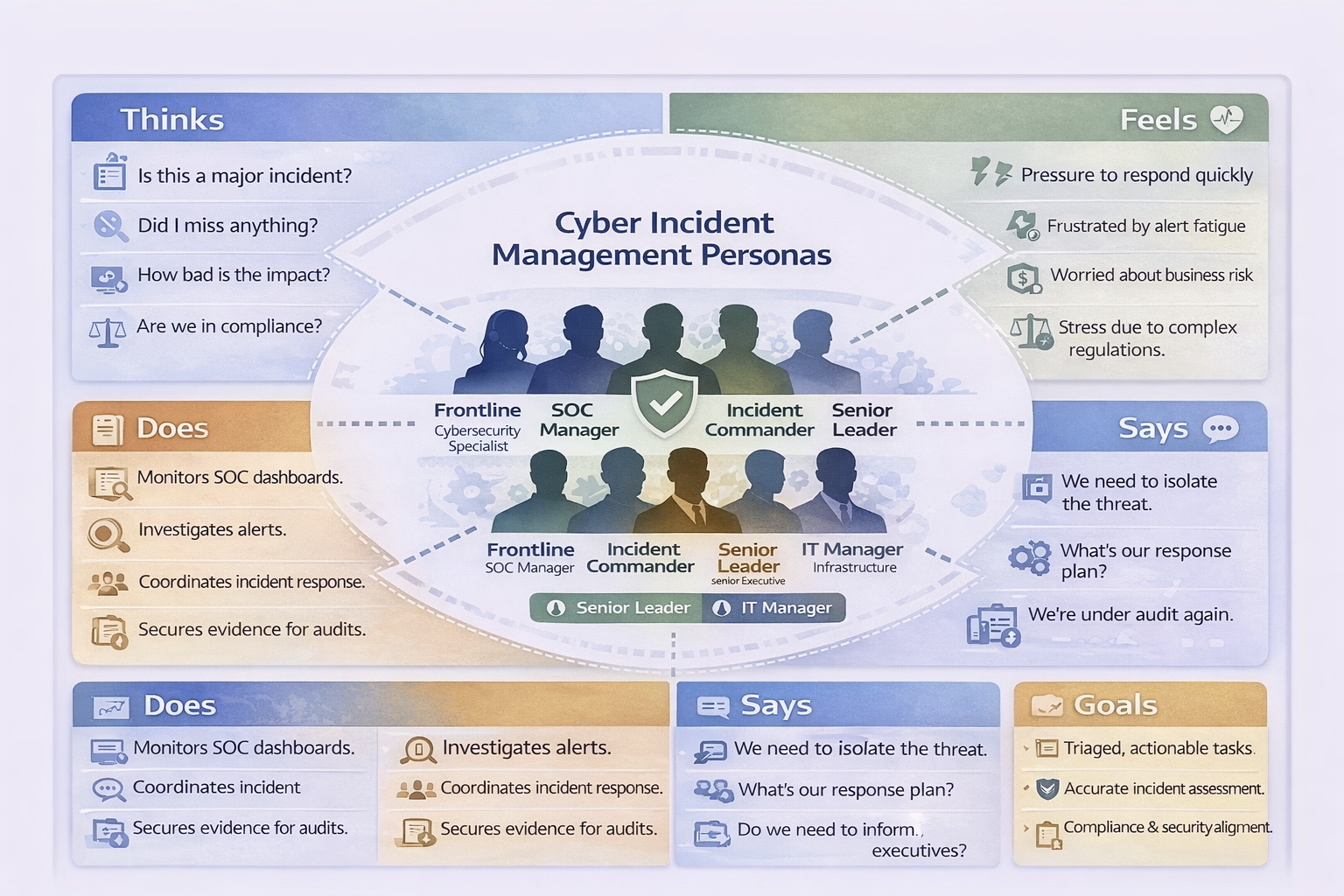
Role-Centered Design Framework
Shows how role needs, decision rights, and operational constraints informed the product structure and screen hierarchy.
View Full Image ↗
Design rationale: This framework connects persona-level insight to product architecture, helping the interface support both frontline action and accountability.